Valkyrie — Aerostructures & Flight Simulation
Golden Flashes Rocketry (KSU-HPRT) · 2026 Intercollegiate Rocket Engineering Competition · Role: Aerostructures Senior Engineer
The work sits inside the Intercollegiate Rocket Engineering Competition (IREC), the largest collegiate rocketry contest, where roughly 150 teams fly to a fixed apogee. Valkyrie is Kent State's entry in the 10,000-foot Student Research and Development (SRAD) category: a 145.87 in, 78.7 lb fiberglass sounding rocket flying a custom N-class solid motor. My contribution was the aerostructures subsystem. I owned the airframe, nosecone, fins, and couplers, set the mass and stability budget, and generated the CFD drag model that fed the team's flight trajectory simulations.
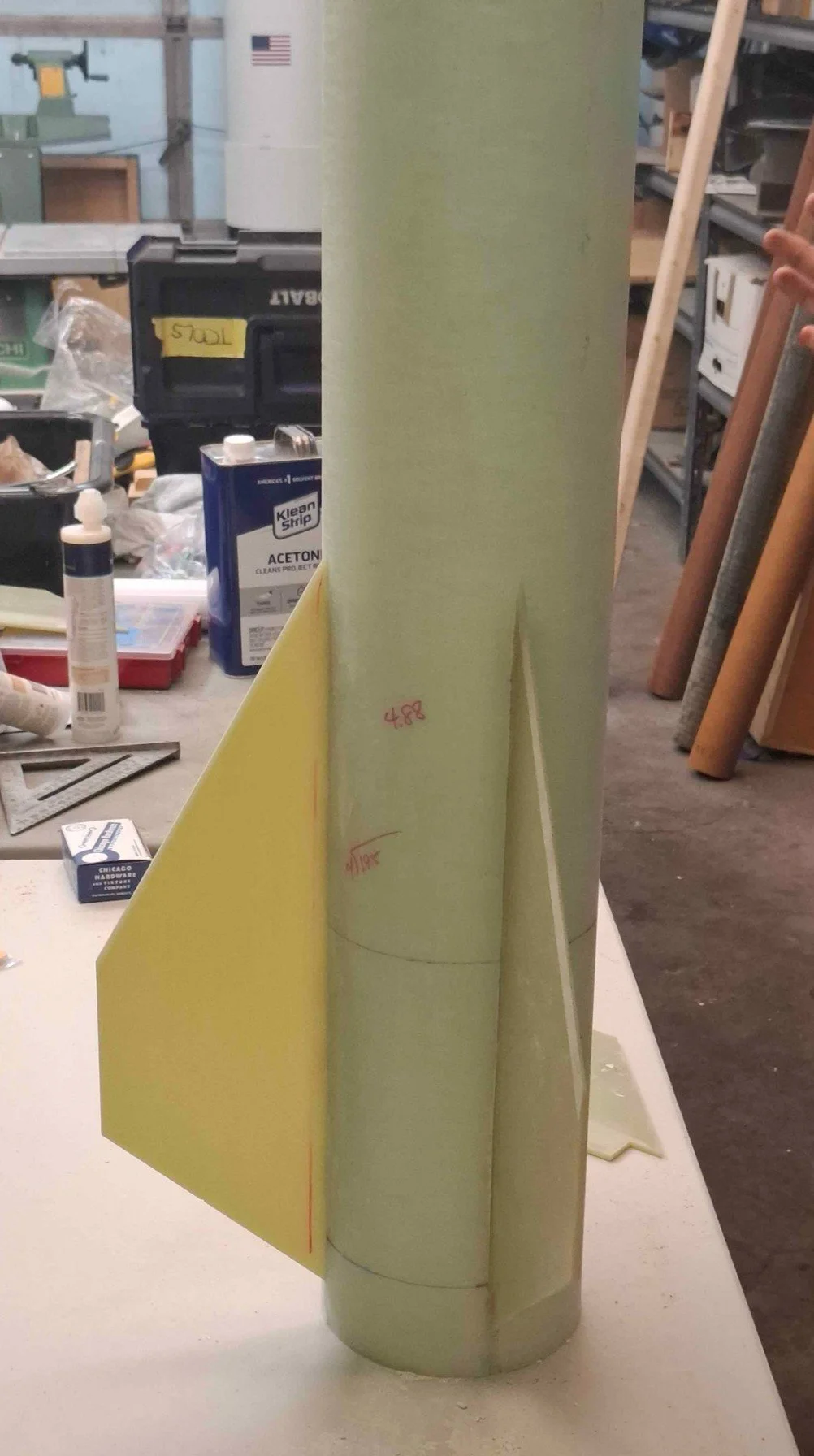
Vehicle Profile. Valkyrie stands 145.87 in tall at 78.7 lb, built from G12 filament wound fiberglass tube and G10 sheet rather than carbon fiber. I ran the material trade on an Ashby specific stiffness versus specific strength chart, where carbon wins on paper; fiberglass won the build because it is RF transparent. The rocket carries live video and telemetry, and a conductive airframe would have forced external antennas and added drag. The nosecone is a 5:1 Von Kármán profile, the lowest drag forebody through the transonic regime per ESDU 89008.
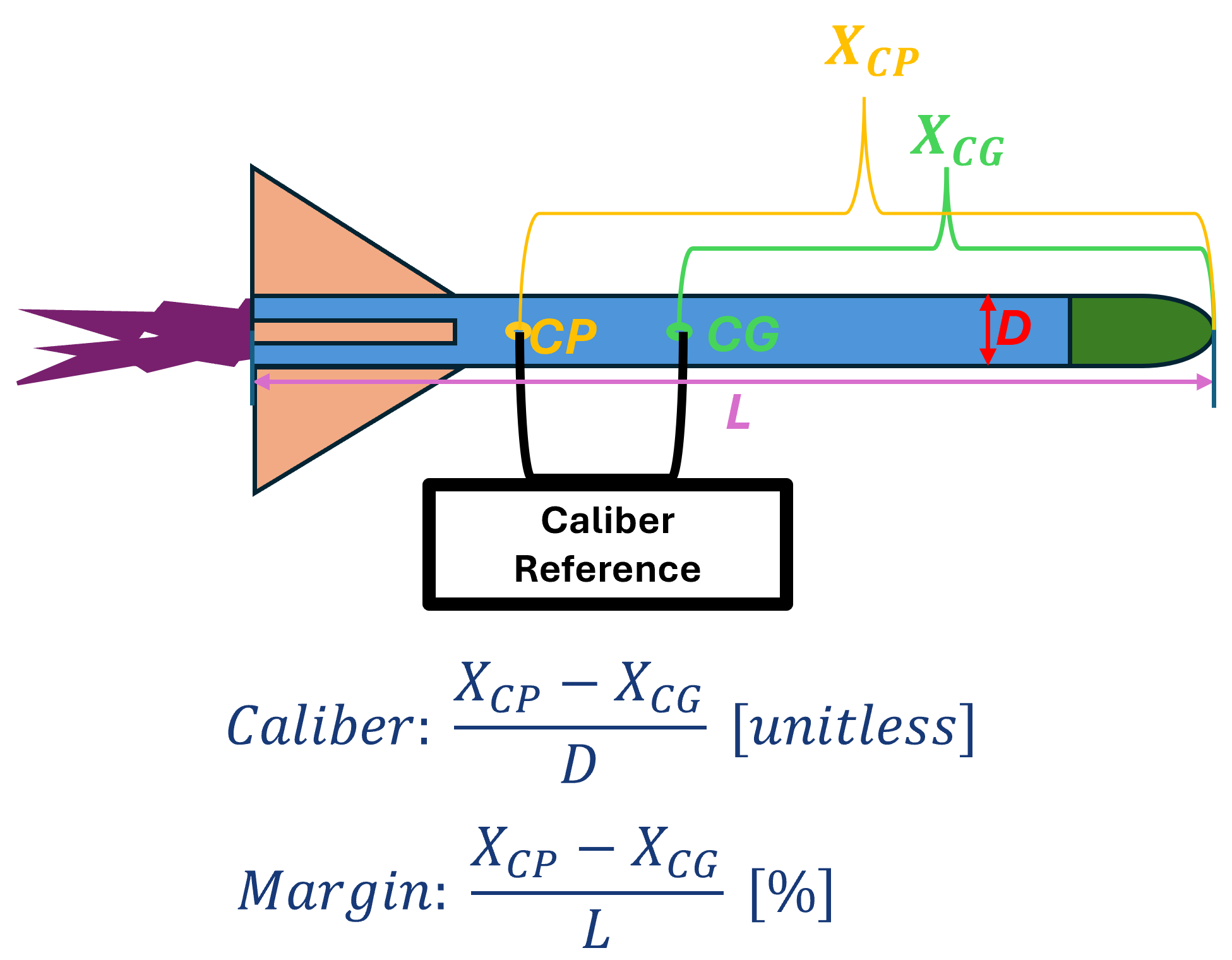
Stability. A rocket is stable only while its center of pressure sits behind its center of gravity, and Valkyrie's CG moves. As the motor burns, the dry casing sheds weight on the aft-body, and the CG marches forward up the body. I placed the CG at 92.7 in and the CP at 105 in, then pulled the fins forward 1.25 in to tune the result, landing a static margin of 1.98 calibers (8.57%) that stays inside the 1.5 to 2.0 target across the full burn rather than just on the pad. I also checked fin flutter with a MATLAB model built from NACA TN 4197: a predicted flutter velocity of 1094 ft/s against a 960 ft/s peak, about 14% of margin.
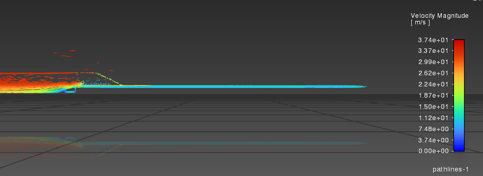
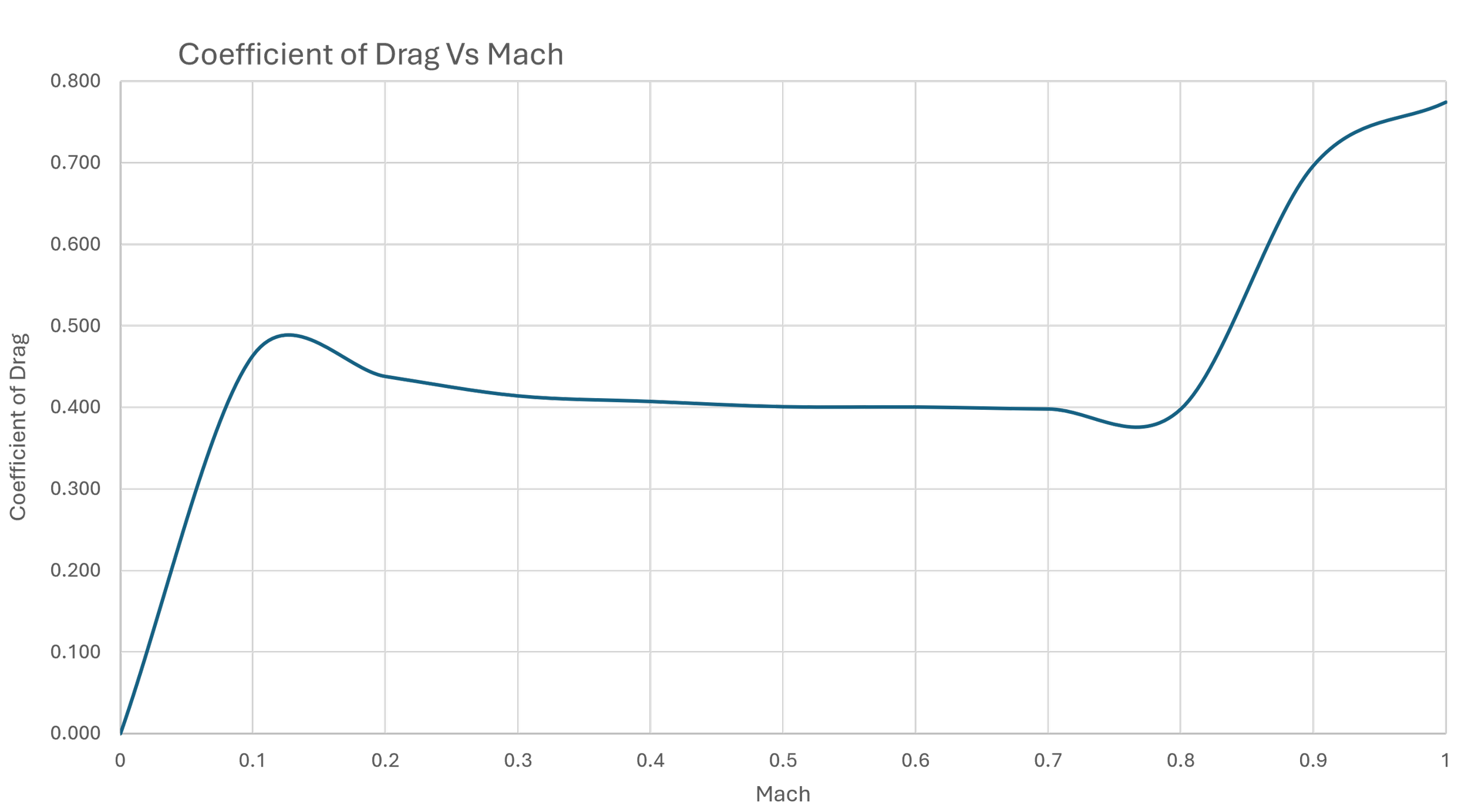
Drag and Flight Simulation. OpenRocket was fine for early layout, but its drag looked high. I ran the airframe through ANSYS Fluent at zero angle of attack and built a coefficient of drag versus Mach curve from the CFD, which came in roughly 14% below OpenRocket on average. Those curves became the drag input for the team's RocketPy Monte Carlo trajectory sims, benchmarked against real flight data to within 2.9% apogee error, predicting 10,597 ft under competition conditions. I flagged that the drag values are likely still slightly low, which lets the simulation overshoot the actual flight; a simulation is only as good as the boundary conditions behind it.
Result. The vehicle flew twice. Test Flight 1 reached about 10,500 ft, then the avionics bay coupler pulled out of the fore tube. Root cause was a set of 1/4-20 countersinks cut too deep, so the screw heads lost bearing contact and the joint released under load. The fix was unglamorous and correct: epoxy fill the holes, redrill, add two fasteners, and shorten the countersink depth so the heads actually clamped. Test Flight 2 flew to 10,415 ft at 918 ft/s and recovered clean. The repair held, the stability held, and the simulation held.