The Application of Shape Memory Alloys in Venus Atmospheric Entry Probe Design
(Aaron Morris, advised by Jeffery Balcerski — Kent State College of Aeronautics and Engineering, supported by the SURE program and OSGC).
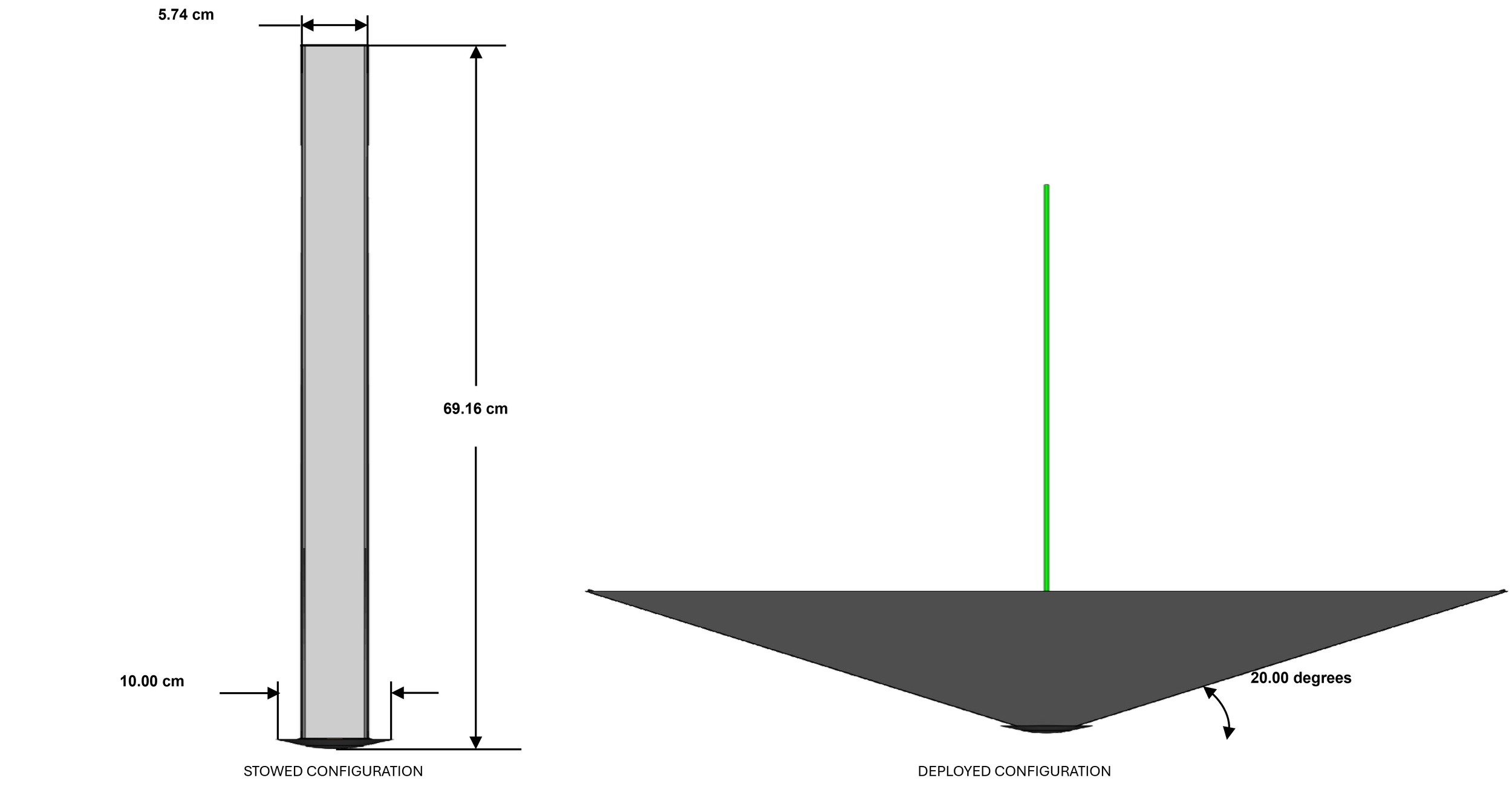
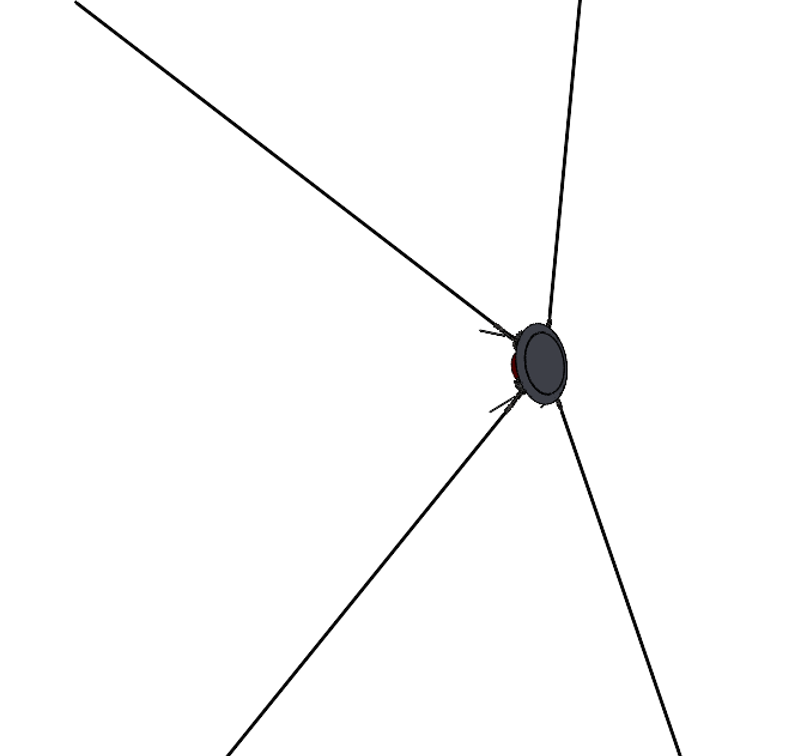
The work sits inside NASA's LEAVES architecture; a swarm of ultralight, kite-like Venus probes (~130 g each) released directly from orbit, no aeroshell, that fly for about 9 hours of atmospheric science. My contribution is a conceptual passive flap-deployment mechanism: instead of motors, control units, and batteries (all mass negatives), Nitinol shape memory alloy actuators that activate from the entry heating itself. The probe rides to Venus stowed in a slender prism, releases at ~160 km, and the Shape Memory Alloy (SMA) driven mechanism deploys spars/flaps to convert it into a near pyramidal drag body for a controlled passive descent.
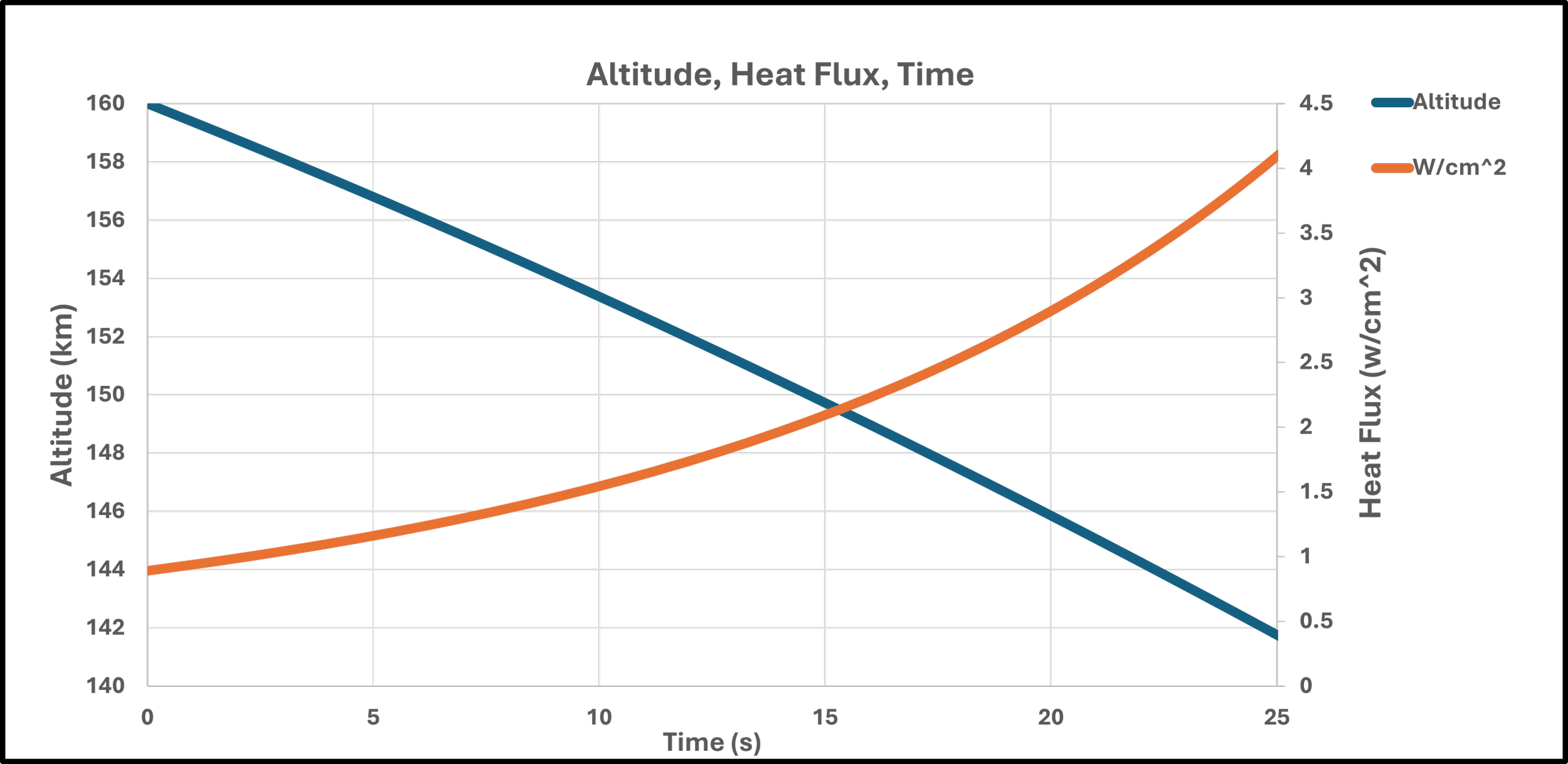
Entry profile. Release at ~160 km, 7 km/s, 5° flight-path angle, 70° half-angle blunt nosecone (nose radius 0.11 m). Frontal area grows from 0.00785 m² stowed to ~1 m² deployed, raising the ballistic coefficient from ~0.0025 to ~0.207. Deployment has to happen within the first 15 seconds (above the 150 km line).
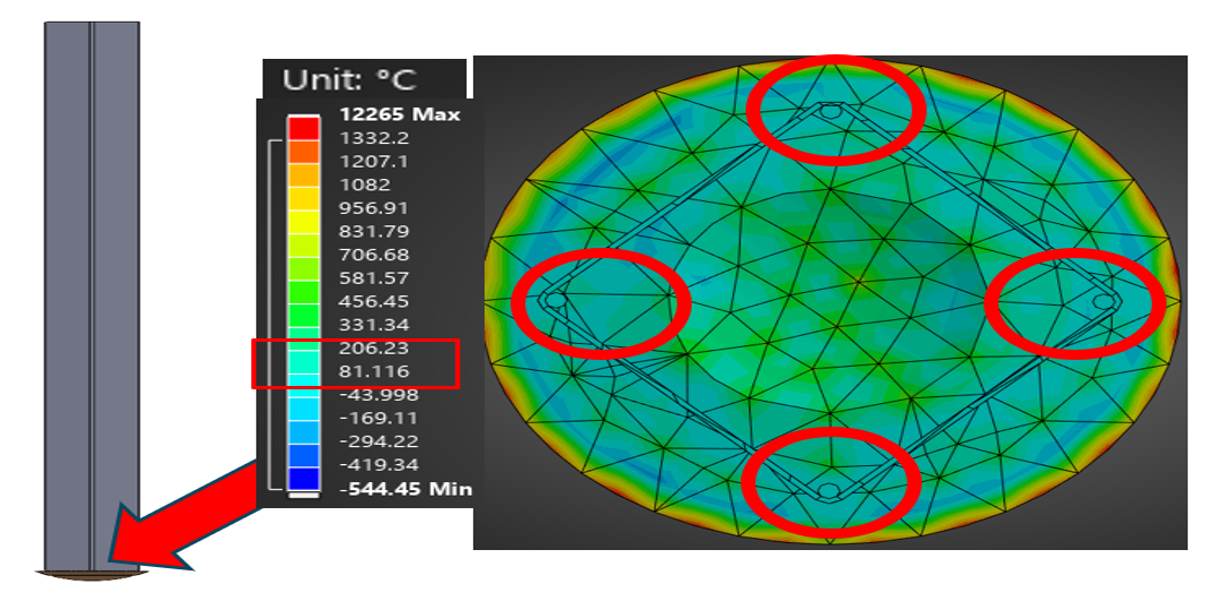
Thermal analysis. I estimated stagnation point convective heat flux with the Sutton–Graves correlation, then ran a 15-second transient thermal simulation in ANSYS with that flux applied to the nose. The hinge/actuator locations hit the 70–90 °C Nitinol activation window within ~2.5 seconds, at ~157 km altitude and roughly 0.9–1 W/cm². The takeaway: enough thermal energy is available early in entry to trigger actuation on time.
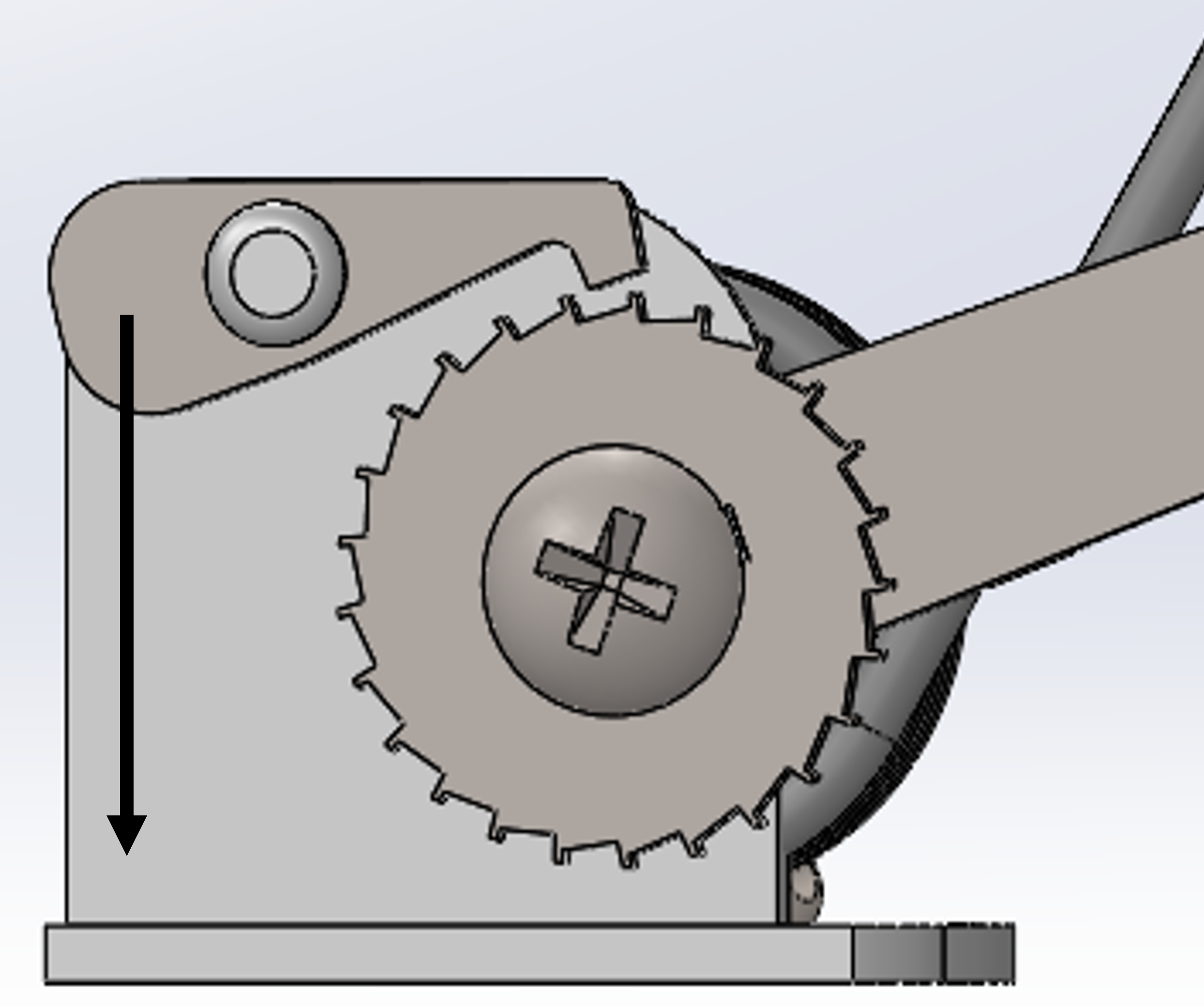
Mechanism and actuator sizing. A pawl-and-ratchet (locking arm/gear) holds a preloaded torsion spring until the SMA releases it. The actuator pulls ~0.2 in from the pivot and needs to lift the locking arm 0.024 in (0.6 mm) to disengage. Using Flexinol reference data, a single 0.020 in wire gives 7.85 lbf, so four wires in parallel (31.4 lbf) meet the ~27.8 lbf demand, and eight wires give a safety factor of 2. SMA wire length is 0.55 in and yields a 4.3% recoverable strain, which is inside acceptable limits.
Result. The concept is both thermally and mechanically feasible: it activates fast enough and produces the required force passively. The open problem is mass — the build came in around 10.5 g against a 5.5 g target, driven mostly by structural components, so the next step is mass and packaging optimization.